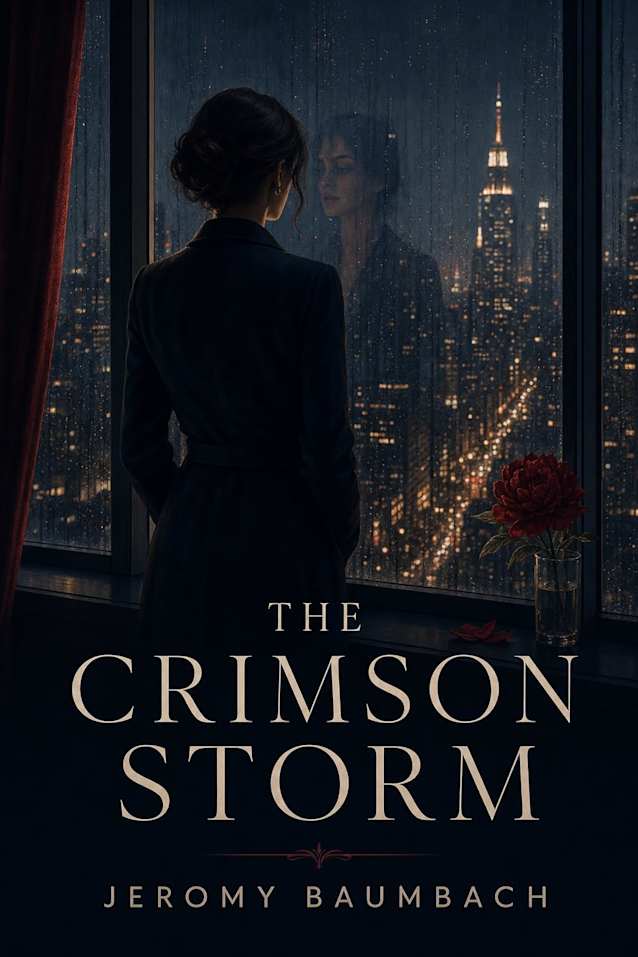
The Crimson Storm
About
The email was four words.
Coffee, if you’re free?
Amelia Crane read it twice, set her cup down harder than she meant to, and did not answer. She had spent six years learning not to answer things like this. She’d rebuilt herself after the worst year of her life — a public, catastrophic near-wedding that three hundred people had already bought plane tickets to attend — and she had done it the only way she knew how: to spec. Clean lines. No unnecessary openings.
Alex Mercer was an unnecessary opening if she’d ever seen one.
He was the novelist she’d argued with at a dinner party six years ago, a man she’d thought about in the inconvenient way you think about a door you’ve decided not to open. He’d gone home that night and written four pages he never showed anyone. Four pages about an architect who’d argued better than him and left the party by ten. Then he deleted them — and thought about her anyway, at readings and on trains and at every subsequent dinner party where they circled each other with careful, plausibly deniable precision.
She didn’t know about the four pages. Not yet.
When he finally calls — not another email, a call, his voice low and direct and nothing like the careful distance of the previous six years — he tells her he’s tired of being a careful man. That he’s spent six years sorry for noticing. Sorry for thinking about her on the train.
She walks out into the storm anyway.
The Crimson Storm is a slow-burn literary romance about two people who know exactly what they want and are afraid of exactly the same thing: being truly, irreversibly known. It is the story of the lightning — and everything that has to be built in the quiet after.
“Love is what we did after the storm. The slow part. The part where you choose it again every single ordinary day.”
For readers of Beth O’Leary, Josie Silver, and Carys Jones. 269 pages. Every one of them earned.